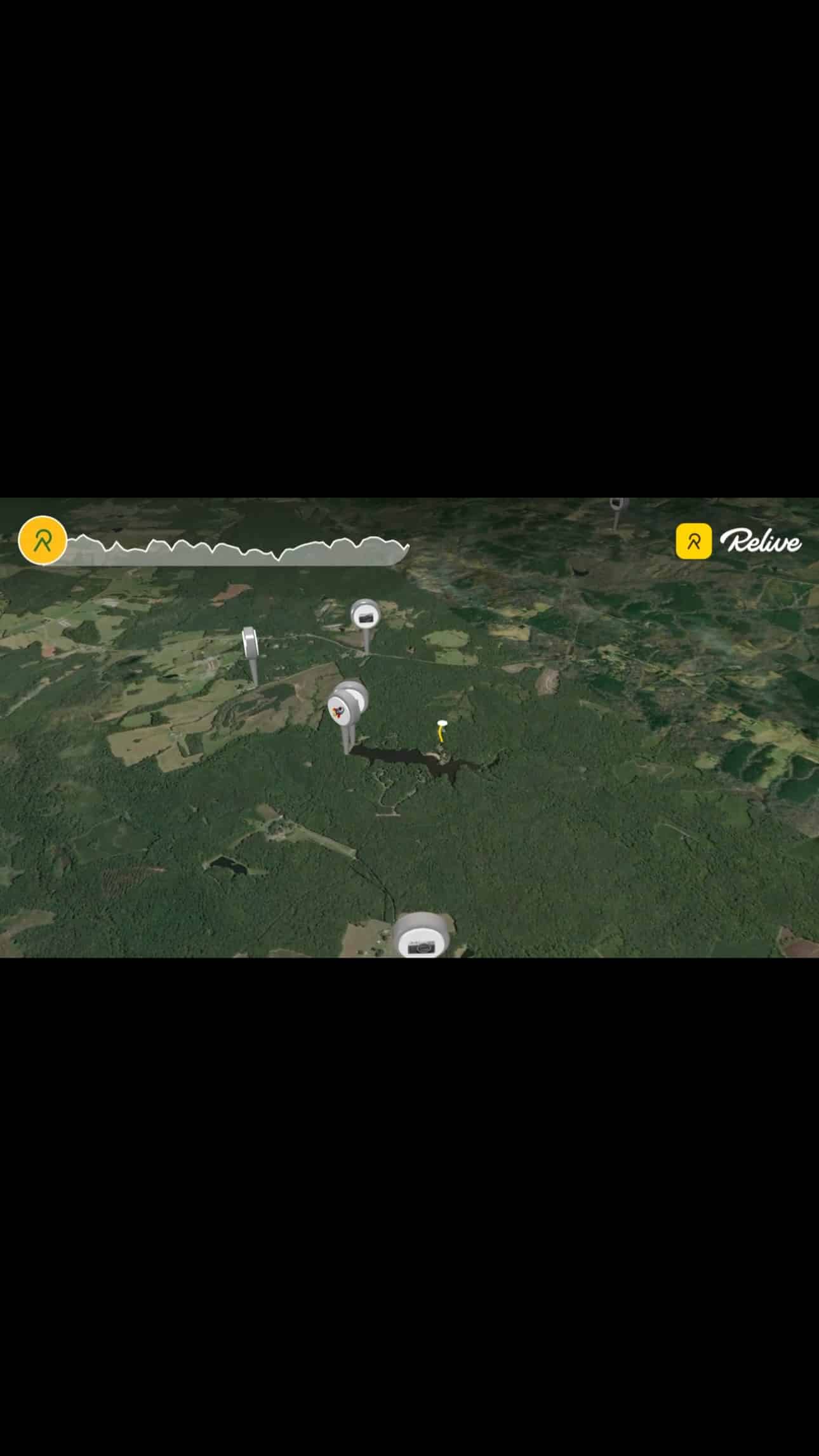
We set out chasing a Monacan Highlands loop and found padlocked gates, “Private” signs, and a GPS track that wasn’t worth a plug nickel. The FatTire Nomad kept nosin’ into manicured cul‑de‑sacs instead of gravel, and the morning was shapin’ up to be a total wash. So we tossed the script, stopped fightin’ the map, and just followed the front wheel on our Amherst County eBike Adventure.
That wrong turn wander dropped us at a cluster of rotting barns and an old silo inside the gates of Sweet Briar College in Amherst County—boards gray and peeling, doors sagging open, winter weeds clutching the foundations. From the road, it looks like just another dying farm complex in central Virginia. But once you start reading the history baked into that wood, you realize you’re looking at the engine room of a plantation that helped shape a whole county, a backdrop for our Amherst County eBike Adventure.

Elijah Fletcher’s Tobacco Empire

In the 1830s, a New Englander named Elijah Fletcher bought a place called Locust Ridge in Amherst County and renamed it “Sweet Briar” after the wild roses his wife favored. The name sounds delicate; the operation was anything but. Over the next decades he stitched together more and more parcels until the estate sprawled over roughly 8,000 acres, making Fletcher one of the biggest landowners in the region.

That empire ran on two things: tobacco and enslaved labor. By the time Fletcher died in 1858, more than 110 enslaved people were held at Sweet Briar, including families remembered today under names like Penn, Taylor, and Hollins. They were the ones planting and cutting leaf, tending stock, raising barns, and generating the wealth that would later be laundered into something called “a women’s college.” When you stand in front of those silos and barns now, you’re not just looking at “old farm stuff”—you’re standing inside the worksite where those families’ unpaid labor was converted into generational power.


From Plantation to “White Girls Only” College
Elijah’s daughter, Indiana Fletcher Williams, inherited that fortune and land. In 1901, her will founded Sweet Briar College as a memorial to her own daughter, Daisy, specifying that it educate “white girls and young women.” The plantation core morphed into a genteel campus, but the terms of who belonged there stayed narrow and tightly patrolled.

For decades the place functioned as a walled‑off world—Southern finishing school polish laid right over plantation soil. Riding past the pastures and brick buildings today, it’s easy to see the charm and miss the line of exclusion quietly written into the college’s DNA.
Dragging the Will into Court
The civil rights era finally forced the issue. In the early 1960s, Sweet Briar’s own leadership concluded that clinging to a whites‑only clause wasn’t just morally bankrupt; it was legally untenable in a state under desegregation orders. Rather than wait to be sued, the college went to court itself, asking judges to strike the racial restriction in Indiana’s will so it could admit students regardless of race.
That fight played out in Virginia and federal courts under cases like Sweet Briar Institute v. Button, part of a broader legal war over segregation and charitable trusts. In 1966, court rulings cleared the way for integration, and students like Marshalyn Yeargin‑Allsopp enrolled as some of the first Black women at Sweet Briar. In a region where many institutions dug in their heels, Sweet Briar’s choice to challenge its own founding document is a rare example of an elite Southern school moving toward integration by going on legal offense.


Riding through a living landscape
A century and a half after Elijah Fletcher’s death, Sweet Briar nearly disappeared again. In 2015, the board announced plans to close the college, and alumnae—the “Vixens”—launched a frenetic campaign and legal challenge of their own, raising millions and forcing a reversal that kept the school alive. The land that once grew tobacco now hosts engineering labs, greenhouses that feed the local community, and a riding program that’s been part of campus culture for generations.
Rolling past those barns on an eBike, you feel all of it layered together: enslaved families whose names only surface in ledgers; a will that tried to freeze whiteness into law; students who walked through newly opened doors in 1966; alumnae who refused to let the place go dark in 2015. The wood may be rotten, the paint long gone, but the ground is still busy with memory.
What started as a dead‑end ride turned into a history lesson on wheels: proof that out here in Amherst County, even the ghost barns are still talking if you’re willing to stop, listen, and let the route find you.


Sources:
Sweet Briar Plantation & Early History
- Elijah Fletcher & The Plantation Era: Details on Elijah Fletcher purchasing “Locust Ridge,” renaming it “Sweet Briar,” and amassing 8,000+ acres and 110+ enslaved people.
- Enslaved Families (Penns, Taylors, Hollins): Specific names of the enslaved families who lived and worked on the plantation.
- Indiana Fletcher Williams & The Will: Information on Indiana inheriting the land and her 1901 will founding the college for “white girls and young women.”
Desegregation & Civil Rights History
- The Legal Battle (Sweet Briar Institute v. Button): The college suing to break its own founder’s racially restrictive will in the 1960s.
- Integration (1966): The year the college officially integrated and opened its doors to all students.
- Marshalyn Yeargin-Allsopp: The first Black student to enroll at Sweet Briar in 1966.
Modern Context & The 2015 Fight
- The Attempted Closure & “The Vixens”: The 2015 attempt to close the college and the alumni-led movement to save it.
Discover more from The FatTire Nomad
Subscribe to get the latest posts sent to your email.